



Instrument-Assisted Soft Tissue Mobilization (IASTM) and Graston
At your first appointment, your Physical Therapist will perform a thorough evaluation and develop a personalized rehabilitation treatment program with you that may include IASTM and Graston Therapy.
What is Instrument-Assisted Soft Tissue Mobilization (IASTM)?
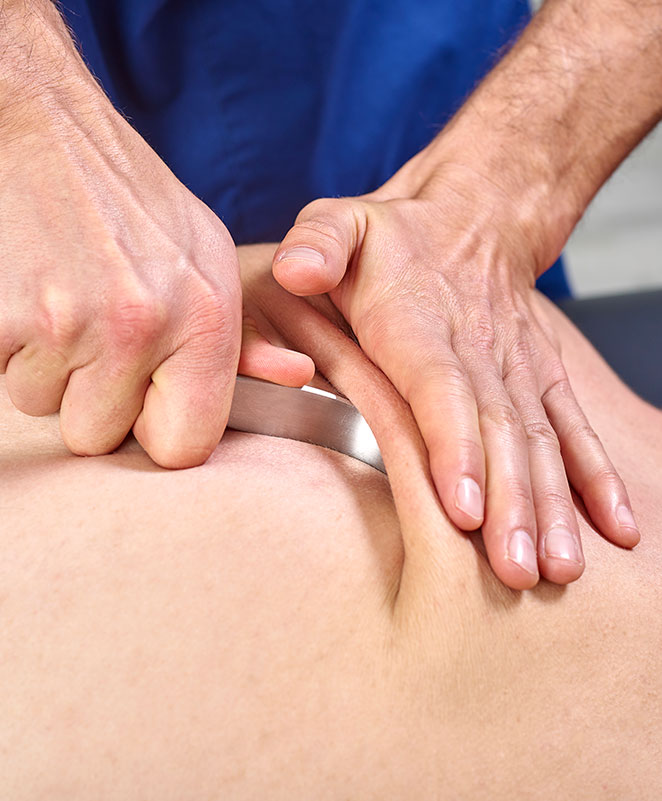
Instrument-assisted soft tissue mobilization (IASTM) is an effective manual therapy treatment to help relieve pain from soft-tissue injuries. Physical therapists use specially designed tools to help remodel scar tissue, increase range of motion and decrease pain. There are multiple types of IASTM products including ASTYM, Hawkgrips and Graston Technique. Despite their differences, each technique is designed to improve blood flow and scar tissue mobility, decrease muscle spasms and improve healing.
Our Specialty
Benefits of IASTM
A trained clinician will use a specially designed tool to help assist with treatment over areas within the muscle, tendon or scar tissue. This type of treatment will enhance healing and help improving the flow of fluid in and around the pain area. Patients can expect improvement of function after one to four treatments.
Patients with a wide variety of symptoms related to chronic pain, muscle spasm or scar tissue buildup may benefit from IASTM.
Common Diagnosis Treated With IASTM are:
- Painful scars
- Tennis elbow
- Runners knee (patellar tendonitis)
- Golfers elbow
- IT band syndrome
- Other tendonitis or tendinosis
- Shin splints
- Carpal Tunnel syndrome
- Fibromyalgia
- Low back and neck pain
- Joint sprain
- Plantar fasciitis
- Post-fracture pain
- De quervains syndrome
What Is the First Step?
Start By Scheduling an Evaluation Appointment.
Don't Wait - Get Started Right Now!
Clinical research shows that the sooner you get started with active rehabilitation, the less likely you will need unnecessary tests, medications, or surgery.
At your evaluation appointment, you will meet with a physical therapist who will perform a thorough evaluation that includes:
- A review of your health history and your specific symptoms.
- A thorough examination that includes assessing the quality and quantity of your movements, and any factors that might put you at risk for delayed recovery or might indicate a serious health problem.
- Assessment of how you use your body at work, at home, during sports, and at leisure.
- Determination of the diagnosis and impairments that are causing your pain and establishment of a treatment plan of care.
Reviews
What Our Clients Say
I came here after surgery for a massive rotator cuff tear. VERY painful. The surgeon said the injury was in the very worst category and I had to be very careful or I could re-injure the shoulder He made me wait over a month to start therapy. Needless to say, I was nervous about starting therapy at all, for fear they might make things worse. I was pleasantly surprised at the concern and care by everyone and Walter seemed to have a clear understanding of the surgery and how important it was to start the recovery process slowly. I have been having 2 sessions per week for about 3 weeks now and I am amazed at my recovery. The exercises and stretches have been perfect for my issue and I always seem to feel better after therapy. I was told this week that we are past the “danger-zone” (of re-injury) and can now begin the strengthening phase. We chose this practice because of their great reputation and a recommendation by a medical professional in the area and have not been disappointed. As an added bonus, the view out the windows of the mountains is amazing!